


Bondo Fiberglass Resin
Our Bondo Fiberglass Resin is a professional-grade repair solution engineered for permanent, waterproof fixes on automotive panels, marine hulls, and household surfaces. This two-part polyester resin creates rock-solid bonds that resist cracking, shrinking, and moisture penetration.
Whether you're rebuilding a rusted rocker panel, patching a boat hull, or reinforcing damaged fiberglass, our resin formula delivers high-strength adhesion that stands up to decades of wear. We've formulated it for easy mixing and application, giving you working time to shape repairs before it cures to a sandable, paintable finish.
Formula & application details
Two-Part Polyester Formula & Working Properties
Bondo fiberglass resin uses a catalyzed polyester chemistry that begins curing when you add the included cream hardener. Mix 8-12 drops of hardener per ounce of resin, adjusting the ratio based on ambient temperature—fewer drops in warm conditions, more in cold.
Once mixed, you’ll have approximately 8-12 minutes of working time before the resin begins to gel. This window gives you enough time to saturate fiberglass cloth or mat, smooth it into position, and work out air bubbles with a spreader or roller. The resin fully cures in 20-30 minutes at room temperature, turning from liquid to a rigid, waterproof solid.
Application Techniques for Maximum Strength
Prepare the repair area by grinding away rust, paint, and loose material until you reach clean, bare substrate. Feather the edges of surrounding paint to create a smooth transition. Cut fiberglass cloth or mat slightly larger than the damaged area—plan for at least 1-2 inches of overlap onto sound material.
Pour bondo fiberglass resin into a clean mixing container, add the cream hardener according to temperature guidelines, and stir thoroughly for 30 seconds. Apply a thin coat of resin to the repair area, then lay the fiberglass cloth over it. Saturate the cloth with additional resin, working from the center outward to eliminate air pockets and ensure complete wet-out.
Surface Preparation & Finishing Steps
Once the resin fully cures, the surface will feel hard and slightly rough to the touch. Use 80-grit sandpaper to knock down high spots and texture from the fiberglass weave. Feather the edges where the repair meets original material to create an invisible transition.
For a smooth, paintable surface, apply a skim coat of Bondo body filler over the cured resin. The filler adheres tenaciously to the resin substrate and allows you to fine-tune contours. Sand the filler with progressively finer grits—120, 180, then 220—until the repair matches surrounding surfaces.
Complete Your Fiberglass Repair Kit


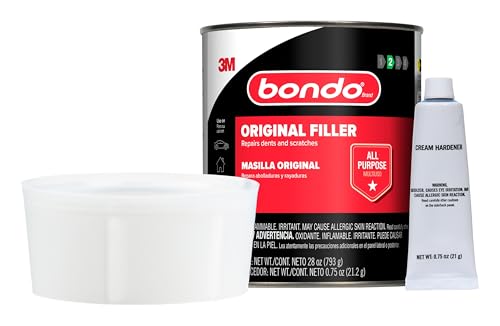


Rated 4.8 by verified buyers
Common Questions About Bondo Fiberglass Resin
Mix 8-12 drops of the included cream hardener per fluid ounce of resin. In warmer conditions above 80°F, reduce to 6-8 drops per ounce to extend working time. In cooler temperatures below 60°F, increase to 12-15 drops to ensure proper curing.
Always stir the hardener thoroughly into the resin for at least 30 seconds. Incomplete mixing results in soft spots that never fully cure.
Bondo fiberglass resin requires reinforcement material to develop structural strength. Used alone, the cured resin is brittle and will crack under stress or impact.
Always apply the resin with fiberglass cloth, mat, or woven roving. The reinforcement gives the repair tensile strength and flexibility while the resin provides rigidity and waterproofing. Multiple layers of cloth and resin create a composite structure far stronger than either material alone.
Bondo fiberglass resin reaches a tacky, gel state in approximately 10-15 minutes at 70°F. It becomes hard enough to sand in 20-30 minutes under the same conditions.
For full chemical cure and maximum strength, allow 2-4 hours before applying heavy loads or topcoats. Curing time increases in cold temperatures and decreases in warm conditions. Higher humidity can slightly extend cure times as well.
Yes, bondo fiberglass resin creates a fully waterproof repair suitable for below-waterline marine applications. The cured polyester resin resists salt water, fresh water, and moisture penetration indefinitely.
For structural hull repairs, use at least three layers of woven roving or heavy mat. Ensure each layer fully wets out with no dry spots or air pockets. For best results, apply repairs from both inside and outside the hull when access allows.
The cured resin accepts automotive primers and paints, but we recommend applying a skim coat of Bondo body filler first. The resin surface retains the texture of the fiberglass cloth, which will telegraph through paint.
Body filler creates a smooth, uniform surface that sands to a paint-ready finish. After sanding the filler, clean with wax and grease remover, then apply epoxy primer before topcoating.
Clean tools immediately with acetone or lacquer thinner before the resin gels. Once partially cured, mechanical removal is the only option—disposable mixing cups and spreaders eliminate cleanup hassle.
For skin contact, wash with soap and water immediately. Acetone works but can dry and irritate skin. Baby oil or cooking oil helps dissolve resin on skin, followed by soap and water. Wear nitrile gloves during application to avoid contact entirely.
Polyester resin experiences minimal shrinkage during cure—typically less than 5% by volume. This slight shrinkage is why professionals apply slightly more material than needed and sand to final contours.
Unlike body fillers, the resin won't continue shrinking after initial cure. Multiple layers of resin and cloth maintain dimensional stability through temperature changes and aging. Any visible shrinkage occurs within the first 24 hours of curing.