
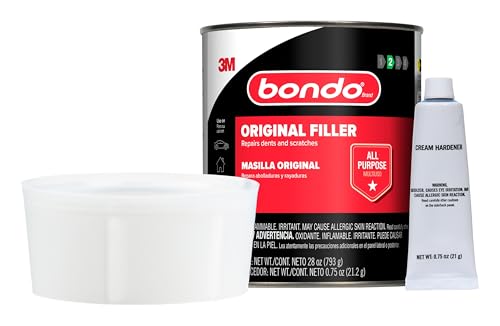



Bondo Plastic & Vinyl Repair Filler
Our Plastic & Vinyl Repair Filler is engineered specifically for flexible automotive surfaces that traditional body fillers can't bond to reliably. Unlike standard plastic bondo alternatives, this two-part formula flexes with bumpers, trim pieces, and interior vinyl without cracking or separating over time.
We designed this repair compound for DIY enthusiasts and professional technicians who need a permanent solution for damaged plastic parts. The unique polymer blend creates a chemical bond with thermoplastics, ensuring repairs hold up through temperature changes, vibration, and repeated flexing. Ready to sand in 20 minutes and compatible with all automotive paint systems.
Formulation & application details
Formulation & Bonding Technology
This plastic bondo formulation uses a specialized polyester resin matrix modified with elastomeric polymers that maintain flexibility after curing. Traditional body fillers become rigid, which causes them to separate from plastic substrates when parts flex during normal use.
Our formula contains bonding agents that create molecular adhesion with thermoplastic surfaces, not just mechanical grip. This chemical bond penetrates the plastic substrate, making the repair as strong as the surrounding material. The compound works across multiple plastic types including ABS, polypropylene, TPO, and vinyl without requiring different products for different materials.
Surface Preparation & Application
Preparing the Repair Area
Clean the damaged plastic thoroughly with wax and grease remover to eliminate contaminants that prevent bonding. Sand the repair area with 80-grit sandpaper to create texture for mechanical grip, then wipe clean with a tack cloth. For best results, slightly bevel the edges of the damage to create a dish shape that the filler can key into.
Mixing & Applying
Dispense the amount of plastic bondo you need onto the included mixing board. Add a ribbon of cream hardener across the filler—approximately 2 inches of hardener per golf-ball-sized amount of filler. Mix thoroughly for 30 seconds until the color is uniform with no streaks. Apply immediately using a plastic spreader, working the material into the damage and slightly overfilling to allow for sanding. Feather the edges thin to blend with the surrounding surface.
Sanding & Finishing
The filler reaches sandable hardness in 20 minutes at 70°F. Begin shaping with 80-grit sandpaper to knock down high spots and level the repair with the surrounding surface. Progress through 150-grit and 220-grit to refine the surface texture.
Because this plastic bondo remains slightly flexible, use light to moderate sanding pressure. Aggressive sanding with heavy pressure can create waves in flexible substrates. A sanding block helps maintain flat surfaces on trim pieces and panels.
Complete Your Automotive Repair Kit


Rated 4.8 by verified buyers


Common Questions About Plastic & Vinyl Repair
Our Plastic & Vinyl Repair Filler works on most automotive thermoplastics including ABS, polypropylene (PP), TPO, and vinyl. It's designed specifically for flexible and semi-rigid plastics found in bumpers, trim, interior panels, and spoilers.
The formula may not bond as effectively to very low-surface-energy plastics like pure polyethylene or PTFE without special adhesion promoters. For best results, clean and sand the surface thoroughly before application to maximize bonding.
The cured filler maintains semi-flexible properties similar to the plastic substrates it's designed to repair. It will flex with bumper covers and trim pieces during normal use without cracking or separating from the substrate.
While flexible, it's not rubber-soft—it cures to a firm consistency that can be sanded and shaped, but retains enough give to move with the part. This balance of workability and flexibility is what prevents the stress cracks common with rigid body fillers on plastic parts.
After mixing with the cream hardener, you have approximately 3-5 minutes of working time at 70°F. Higher temperatures reduce working time, while cooler temperatures extend it slightly.
The filler reaches sandable hardness in about 20 minutes under normal conditions. For larger repairs, mix only what you can apply in 3 minutes to avoid waste. Multiple small batches work better than one large batch for complex repairs.
The cured filler accepts all automotive primers and paints directly without special sealers. For parts that flex significantly like bumpers, we recommend using a flexible bumper primer for best results, though standard primers also work.
Ensure you sand the repair to at least 220-grit before priming. The smooth, properly sanded surface helps primer adhere uniformly and prevents texture show-through in the final paint.
This plastic bondo is designed for cosmetic and semi-structural repairs on plastic parts, not for load-bearing structural applications. It works well for cracked bumper covers, broken trim tabs, damaged spoilers, and similar repairs where the part doesn't support vehicle weight.
For mounting tabs or brackets that bear mechanical loads, consider reinforcing the repair with backing material or replacing the part if structural integrity is compromised. The filler bonds strongly to plastic but shouldn't replace engineered structural components.
Apply the filler in layers no thicker than 1/4 inch per application. Thicker applications may not cure properly throughout and can trap solvents that prevent full hardening.
For deeper damage, build up the repair in multiple thin layers, allowing each to cure before adding the next. This layering approach creates stronger repairs and prevents the internal cracking that can occur in excessively thick applications.
The flexible formulation is designed to withstand the temperature cycling that automotive parts experience. The cured filler expands and contracts with the plastic substrate, preventing the thermal stress cracks that occur with rigid fillers.
Repairs properly prepared and applied hold up in temperatures from well below freezing to over 150°F, the typical range for exterior automotive plastic parts. The key is ensuring good surface preparation and proper mixing ratios for maximum bond strength.