


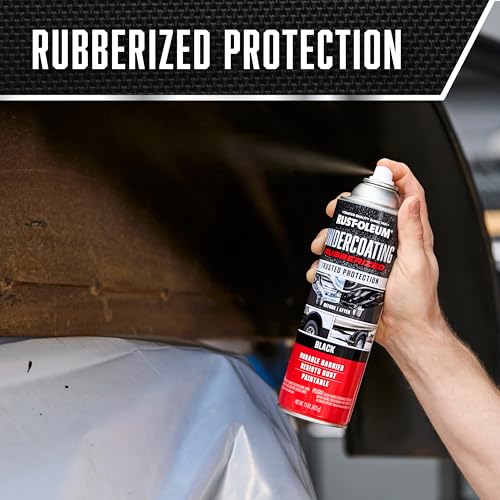

Bondo Rubberized Undercoating
Our Bondo Rubberized Undercoating delivers professional-grade protection for vehicle underbodies, wheel wells, and exposed metal surfaces. The rubberized formula creates a flexible, impact-resistant barrier that guards against rust, corrosion, and road debris while reducing road noise and vibration.
Designed for both DIY enthusiasts and professional body shops, this undercoating applies smoothly with its easy-spray aerosol system and dries to a tough, semi-textured finish. The formula's flexibility allows it to move with your vehicle's metal surfaces through temperature changes and impacts, preventing cracking and peeling that compromise protection.
Protection & application specs
Application Surface & Compatibility
Bondo Rubberized Undercoating adheres to multiple substrate types, making it versatile for comprehensive vehicle protection. Apply directly to bare metal surfaces for maximum rust prevention on new or restored vehicles, or spray over existing painted surfaces and factory undercoating to add an extra protective layer.
The formula works effectively on underbody pans, frame rails, wheel wells, rocker panels, and any exposed metal components vulnerable to road debris and moisture exposure. For optimal results on bare metal, clean surfaces thoroughly and apply a rust converter or primer to any existing oxidation before coating. The rubberized formula is compatible with the same protective materials found in our specialty fillers line, allowing you to complete full body repairs and protection in coordinated steps.
Spray Application Technique
Our aerosol delivery system provides controlled coverage without professional spray equipment. Shake the can vigorously for two minutes before use and intermittently during application to keep the rubberized particles suspended in the propellant.
Hold the can 10-12 inches from the surface and apply in steady, overlapping passes to build an even coat. Multiple thin layers provide better coverage and flexibility than one heavy application—we recommend 2-3 coats with 10-15 minute flash time between passes. The coating begins to tack up within 15-20 minutes and reaches handling strength in 1-2 hours, though full cure takes 24-48 hours depending on temperature and humidity.
Protection Performance & Durability
The rubberized polymer formula creates a moisture barrier that prevents water, salt, and chemical exposure from reaching metal surfaces. This protection is critical in winter climates where road salt accelerates corrosion, and in coastal areas where salt air causes oxidation.
Unlike rigid coatings that crack under impact and vibration, our flexible formula absorbs stone chips and road debris without breaking the protective seal. The sound-deadening properties reduce noise transmission from the road surface through floor pans and wheel wells, creating a quieter interior environment particularly noticeable at highway speeds.
Complete Your Vehicle Protection System


Rated 4.8 by verified buyers


Common Questions About Bondo Rubberized Undercoating
You should remove loose, flaking rust before application for best adhesion. Surface rust that's tightly adhered can be coated directly, but we recommend treating it with a rust converter first to stop active corrosion.
The undercoating seals out moisture to prevent new rust formation, but it won't reverse existing corrosion. For heavy rust-through areas, repair with Bondo Metal Reinforced Filler before applying protective coating for structural integrity.
A typical passenger car requires 3-5 cans of Bondo Rubberized Undercoating for full underbody coverage including wheel wells. Trucks and SUVs with larger surface areas need 6-8 cans, while focusing only on wheel wells and rocker panels takes 2-3 cans.
Each can covers approximately 10-15 square feet with recommended two-coat application. Measure your specific areas or start with a smaller quantity and purchase additional cans as needed—the formula bonds to itself for seamless application over multiple sessions.
Apply Bondo Rubberized Undercoating when both air and surface temperatures are between 50°F and 90°F for optimal flow and curing. Cold temperatures slow drying and may cause the coating to spray unevenly, while excessive heat can cause too-rapid drying and poor leveling.
The surface must be completely dry—moisture trapped under the coating causes adhesion failure and continued corrosion underneath. Work in a well-ventilated area or outdoors, avoiding application in direct sunlight on hot days which can make the surface too warm.
The coating reaches handling strength in 1-2 hours and you can carefully drive the vehicle after 4-6 hours for necessary movement. However, full cure takes 24-48 hours depending on temperature and humidity—we recommend waiting at least 24 hours before regular driving.
Avoid washing the underbody or driving through deep water for 48 hours after application to allow complete curing and maximum adhesion development. The coating continues to harden over the first week to reach full protective performance.
Yes, the rubberized formula provides noticeable sound deadening by absorbing vibration and reducing noise transmission through floor pans and wheel wells. The effect is most apparent at highway speeds and on rough pavement where road noise is typically loudest.
The coating works by adding mass and flexibility to metal panels, dampening their resonance. For maximum noise reduction, apply thicker coverage (3 coats) in wheel wells and directly behind interior floor areas where sound transmission is greatest.
The rubberized texture and flexible surface aren't designed for paint topcoats—paint applied over the coating may crack as the flexible undercoating moves with impacts and temperature changes. The coating dries to a durable black finish intended as the final protective layer.
If you need a painted finish, use a rigid undercoating or apply the rubberized coating only to hidden underbody areas while painting exposed surfaces with appropriate automotive paint systems.
Avoid spraying Bondo Rubberized Undercoating directly on exhaust pipes, catalytic converters, or mufflers, as these components reach temperatures above the coating's 200°F rating. The coating can be applied to adjacent frame members and underbody panels near exhaust systems as long as direct contact is avoided.
Mask or shield hot exhaust components during application and maintain at least 2-3 inches clearance. The coating on nearby surfaces won't be affected by radiant heat but should never be in direct contact with exhaust parts.