


Bondo Glazing and Spot Putty
Our Glazing and Spot Putty is a premium finishing putty engineered for fast, professional surface repairs. We formulated this smooth, easy-spreading compound to fill pinholes, scratches, and minor surface imperfections on auto body panels, metal, fiberglass, and wood.
This ready-to-use formula eliminates mixing, so you can apply it straight from the tube with minimal prep time. The putty spreads evenly, dries quickly, and sands to a smooth finish that accepts primer and paint beautifully. Whether you're restoring a classic car, repairing body damage, or finishing a custom project, our glazing and spot putty delivers the flawless surface you need before paint.
Product specifications & application details
Application & Surface Preparation
Before applying Bondo glazing and spot putty, ensure the repair area is clean, dry, and free of grease, rust, or loose paint. We recommend sanding the surface with 80-180 grit sandpaper to create proper mechanical adhesion.
Squeeze the putty directly onto the surface imperfection and spread it evenly with a putty knife or spreader. Apply thin layers rather than one thick coat — multiple thin applications produce better results and faster drying. For deeper scratches or pinholes, allow the first coat to dry completely before adding additional layers.
Compatible Surfaces & Materials
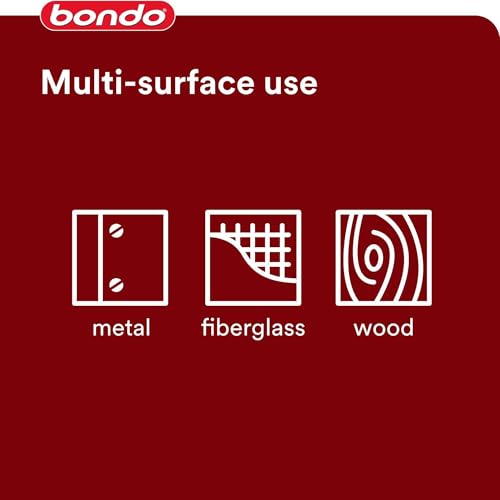
Bondo glazing and spot putty adheres to a wide range of automotive and general-purpose substrates. We’ve tested it extensively on bare steel, aluminum, galvanized metal, SMC (sheet molded composite), fiberglass, and properly prepared existing paint surfaces.
For wood applications, our putty works exceptionally well on hardwoods, softwoods, MDF, and plywood. It fills nail holes, dents, and grain imperfections on furniture, cabinetry, trim work, and millwork projects. The non-staining formula won’t discolor light woods or bleed through water-based stains.
Coverage & Tube Capacity
Each 4.5 oz tube of our glazing and spot putty covers approximately 30-40 square inches at typical application thickness (1/16 inch). Actual coverage depends on the depth of imperfections and the number of coats needed.
For reference, a single tube handles 15-20 small dings or pinholes on an automotive panel, or fills approximately 50 linear feet of hairline scratches. Professional body shops and hobbyists appreciate the squeeze tube format, which prevents waste and allows precise material control compared to larger cans.
More Surface Repair Solutions


Rated 4.8 by verified buyers


Common Questions About Glazing and Spot Putty
Our glazing and spot putty effectively fills surface imperfections up to 1/4 inch deep. For best results, apply multiple thin coats rather than one thick application. Each layer should be approximately 1/16 inch thick, allowing proper drying between coats.
For deeper damage like large dents or holes, we recommend using Bondo Body Filler first to build up the repair area, then finishing with glazing and spot putty to achieve a smooth, paint-ready surface.
No mixing is required. Bondo glazing and spot putty comes ready to use straight from the tube. Simply squeeze the product onto the repair area and spread it with a putty knife or spreader.
This convenience makes it ideal for quick touch-ups and small repairs where mixing two-part fillers would be inefficient. The formula is pre-catalyzed to cure through solvent evaporation rather than chemical reaction.
At 77°F with normal humidity, the putty dries to the touch in approximately 30 minutes. Full cure typically occurs within 2-3 hours, depending on application thickness and environmental conditions.
Cooler temperatures or high humidity extend drying time, while warmer conditions accelerate it. We recommend waiting until the putty is completely hard before sanding to avoid gumming up sandpaper or creating an uneven surface.
Our glazing and spot putty works well on rigid plastics like SMC and fiberglass, but it's not suitable for flexible plastics such as bumper covers, polypropylene (PP), or thermoplastic olefin (TPO). These materials require specialized flexible fillers that move with the substrate.
For rigid plastic components like some fender flares and interior panels, ensure the surface is properly sanded for mechanical adhesion. Test a small inconspicuous area first to verify compatibility with your specific plastic type.
Start with 150-180 grit sandpaper to level the repair area and remove excess putty. Progress to 220 grit for general smoothing, then finish with 320 grit for a surface that's ready for primer.
For ultra-smooth results on show-quality finishes, you can sand to 400 grit before priming. Always sand in a cross-hatch pattern or circular motion to avoid creating visible scratches that may show through paint.
Yes, Bondo glazing and spot putty works excellently on wood surfaces. It fills nail holes, dents, scratches, and open grain on hardwoods and softwoods. The non-staining formula won't bleed through paint or discolor surrounding wood.
For best results on wood, sand the area smooth after the putty cures, then apply your chosen finish. The putty accepts stain, paint, and clear topcoats. It's particularly useful for furniture restoration, cabinetry, and millwork where a smooth finish is essential.
Always replace the cap immediately after use and ensure it's tightened securely to prevent solvent evaporation. Store the tube at room temperature in a dry location away from direct sunlight and heat sources.
Properly sealed product remains usable for up to two years from the manufacture date. If the putty becomes thick or difficult to spread, it has likely dried out and should be replaced. Storing the tube cap-side-down can help prevent air pockets from forming at the opening.