


Bondo Wood Filler
Our Bondo Wood Filler delivers professional-grade wood repair for interior and exterior projects. This advanced formula rebuilds rotted, damaged, or missing wood with a durable compound that sands, stains, and paints just like natural lumber.
Whether you're restoring window frames, repairing furniture, or filling nail holes, this wood filler bonds permanently to create a surface that's often stronger than the original wood. It won't shrink, crack, or fall out over time, making it the trusted choice of contractors and DIYers for over four decades.
Formula & application details
Formula & Application Process
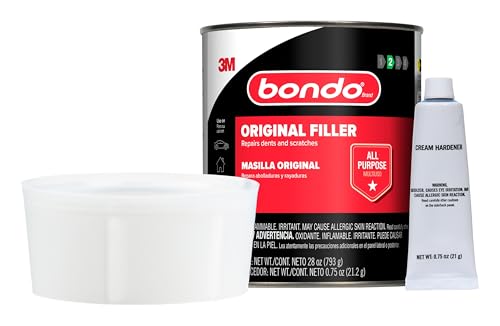
Bondo Wood Filler uses a two-part polyester resin system that creates a chemical bond with existing wood fibers. Simply mix the filler base with the included hardener according to package directions, then apply with a putty knife or spreader to the damaged area.
The working time gives you 3-5 minutes to shape and smooth the material before it begins to harden. Unlike traditional wood filler products that rely on evaporation, our formula cures through a chemical reaction that creates exceptional strength and durability.
Surface Compatibility & Preparation
This wood filler bonds to pine, oak, maple, cedar, plywood, particle board, and virtually all wood species and wood-based composites. Clean the damaged area thoroughly, removing all loose wood, rot, paint flakes, and debris before application.
Interior Applications
Use Bondo Wood Filler on furniture, cabinets, trim, molding, doors, window frames, and flooring. The formula works equally well on raw wood and previously finished surfaces after proper surface preparation.
Sanding & Finishing Techniques
Once cured, wood bondo sands with standard sandpaper or power sanders without gumming, tearing, or creating dust clouds. Start with 80-grit sandpaper to shape the repair, then progress through 120-grit and 220-grit for a smooth finish that blends seamlessly with surrounding wood.
The cured filler accepts all wood stains, though it typically appears slightly lighter than natural wood grain. For invisible repairs on stained projects, test stain colors on a hidden area first, or use wood-toned putty markers after staining to match grain patterns.
Complete Your Wood Repair Projects


Rated 4.8 by verified buyers


Questions About Bondo Wood Filler
Yes, our wood filler formula is water-resistant and suitable for outdoor applications. For maximum weather protection, seal the completed repair with exterior-grade paint, stain, or varnish within 24 hours of sanding.
The cured filler withstands moisture, temperature fluctuations, and UV exposure when properly finished. Many professionals use it for deck repairs, siding restoration, and outdoor furniture projects with excellent long-term results.
Mix approximately 1 inch of hardener cream for every golf-ball-sized portion of filler base. The hardener tube includes measurement markings to help you achieve the correct ratio.
Too much hardener causes the mixture to cure too quickly, while too little extends working time but may result in incomplete curing. Follow the package directions precisely for optimal working time and maximum strength. Mix thoroughly until the color is uniform with no streaks.
No, Bondo Wood Filler cures through a chemical reaction rather than evaporation, so it maintains its volume without shrinking. The cured material also resists cracking under normal stress and temperature changes.
This permanent bond means you won't need to refill the same repair months later, unlike water-based fillers that can shrink as moisture evaporates. For deep repairs, apply in layers up to 1/4 inch thick to ensure complete curing throughout the material.
Yes, the cured filler accepts wood stain, though it typically absorbs color differently than natural wood grain and may appear slightly lighter. For best color matching, test your stain on a hidden area of the repair first.
Many woodworkers apply stain to the entire surface including the repair, then use wood-toned putty markers or artist's pencils to add grain detail to the filled area. This technique creates nearly invisible repairs on stained furniture and trim.
The filler reaches sandable hardness in approximately 15 minutes under normal room temperature conditions (70-75°F). Warmer temperatures accelerate curing, while cooler conditions may extend the wait time to 20-30 minutes.
Test hardness by touching the repair with your fingernail before sanding. If it feels firm and doesn't dent easily, it's ready to sand. For deep repairs with multiple layers, allow each layer to cure fully before applying the next.
Properly stored unopened wood filler maintains workability for up to two years from the manufacture date printed on the container. Store in a cool, dry location away from direct sunlight and extreme temperatures.
Once opened, keep the lid tightly sealed and the hardener tube cap closed between uses to prevent premature curing. If the base material becomes unusually thick or difficult to mix with hardener, the product has exceeded its useful life and should be replaced for best results.
Yes, our formula bonds to particle board, plywood, MDF, OSB, and all wood-based composites. These materials often have exposed edges or damaged surfaces that benefit from filler reinforcement.
For particle board repairs, the filler actually creates a stronger surface than the original material. Sand the cured repair smooth, then seal with primer before painting to prevent moisture absorption in the surrounding particle board.