


Bondo Color
Bondo Color is our breakthrough body filler that eliminates the guesswork from automotive repair. We've infused our trusted filler formula with pigment that matches common automotive primer colors, so you can fill and prime in one step.
Whether you're repairing door dings, rust damage, or minor collision work, Bondo Color helps you achieve professional-grade results without the need for separate priming. Our formula spreads smoothly, cures fast, and sands easily to create a surface ready for your final paint coat.
Formula & application details
Pre-Tinted Formula & Color Matching
Bondo Color arrives pre-tinted in a neutral gray that mimics standard automotive primer. This pigmentation serves two purposes: it helps you see exactly where you’ve applied filler during the repair process, and it creates a consistent base color that integrates seamlessly with primer and paint.
Unlike traditional fillers that cure to an off-white or tan shade, bondo color blends into the repair zone without telegraphing through lighter paint colors. The gray tone is carefully calibrated to work with both light and dark vehicle finishes, giving body shops and DIY enthusiasts a versatile solution for multiple projects.
Application & Curing Process
Mixing & Spreading
Mix bondo color with the included hardener cream at a ratio of approximately 2% hardener to filler by volume. We recommend starting with a golf-ball-sized amount of filler and a 1-inch ribbon of hardener, adjusting as you become familiar with the working time.
Once mixed, you have 5-7 minutes of working time to spread the filler across your repair area. Use the included plastic spreader to press the material firmly into scratches, dents, or holes, working from the center outward to eliminate air pockets.
Surface Preparation & Compatibility
For optimal adhesion, clean the repair area with wax and grease remover, then sand with 80-grit paper to create mechanical tooth. Bondo Color adheres to bare metal, fiberglass, aluminum, and existing paint that’s been properly abraded.
Remove all rust using a wire brush or grinder before application—our filler is not a rust encapsulator and requires clean substrate for long-term durability. If you’re working with deep damage, apply bondo color in layers no thicker than 1/4 inch, allowing each layer to cure before adding the next.
More Automotive Body Repair Solutions



Rated 4.8 by verified buyers
Questions About Bondo Color
Yes, as long as the existing paint is sound and properly prepared. Sand the area with 80-grit sandpaper to remove gloss and create mechanical adhesion, then clean with wax and grease remover.
Bondo Color will bond to factory finishes, previous repaints, and e-coat primers. If the existing paint is flaking, peeling, or showing signs of delamination, remove it completely before applying filler to ensure a lasting repair.
The gray pigment in bondo color has no negative effect on your topcoat. It actually helps create more uniform primer coverage by reducing the contrast between filler and bare metal.
The gray tone is neutral enough to work under any vehicle color, from whites and silvers to blacks and deep blues. You'll follow the same painting process as with traditional filler—sand smooth, apply primer, then spray your color coats according to paint manufacturer instructions.
We recommend applying Bondo Color in layers no thicker than 1/4 inch. Thicker applications can trap solvents, causing pinholes or incomplete curing in the center of the repair.
For deep dents or holes, build up the repair in multiple thin layers, allowing each to cure fully before adding the next. This layering technique produces stronger, more stable repairs that won't crack or shrink over time.
Bondo Color is formulated for metal, fiberglass, and rigid surfaces. For flexible plastic bumpers, we recommend our Bondo Flexible Filler, which contains plasticizers that allow the cured material to bend without cracking.
Standard bondo color will bond to rigid plastic components like grille panels or trim pieces, but it lacks the flexibility needed for bumper covers that compress during minor impacts.
Bondo Color cures hard enough to sand in 15-20 minutes at 70°F. You can test readiness by scratching the surface with your fingernail—if it leaves a mark, wait a few more minutes.
Colder temperatures extend cure time, while warmer conditions accelerate it. Working in temperatures below 60°F may require 30-40 minutes for full cure. Once cured, the material won't soften or gum up your sandpaper.
Yes, you should still apply automotive primer over bondo color repairs before topcoat. While the gray pigment helps integrate the repair visually, primer serves additional functions like corrosion resistance, topcoat adhesion, and final surface leveling.
The advantage of Bondo Color is that you'll need fewer primer coats to achieve even coverage compared to traditional tan or white fillers. Most repairs require just one or two coats of primer instead of three or four.
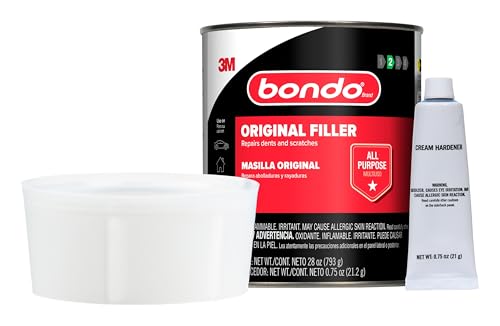
Each 1-quart can of Bondo Color includes a tube of hardener cream, a plastic mixing board, and a flexible plastic spreader. The hardener tube contains enough cream for multiple repair projects.
You'll need to supply your own sandpaper, mixing sticks, and protective gloves. For larger projects, we offer bulk hardener and additional spreaders separately to keep your workflow efficient.