


Bondo Fiberglass Repair Kit
We designed our Fiberglass Repair Kit to deliver professional-strength restoration for fiberglass surfaces in marine, automotive, and home applications. This complete system combines premium fiberglass resin with woven cloth reinforcement to create permanent, waterproof repairs on boats, bathtubs, shower stalls, automotive body panels, and more.
Whether you're patching a crack in your boat hull or rebuilding a damaged fiberglass fender, our kit provides everything you need for durable, long-lasting results. The two-part resin system cures to a rock-hard finish that you can sand, drill, and paint just like the original surface.
What's included in the kit
Resin System and Fiberglass Cloth Components
Our fiberglass repair kit contains a two-part polyester resin system that chemically bonds with existing fiberglass to create seamless, structural repairs. The liquid resin and cream hardener mix in precise ratios to initiate the curing process, transforming from liquid to solid in minutes.
The included woven fiberglass cloth provides the structural reinforcement necessary for strong, lasting repairs. When saturated with our resin mixture, the cloth conforms to complex curves and contours while adding tensile strength that prevents future cracking. For maximum durability, we recommend applying multiple layers of resin-saturated cloth on larger repairs or high-stress areas.
Surface Preparation and Application Process
Preparing the Damaged Area
Proper surface preparation ensures maximum adhesion and repair strength. Begin by cleaning the damaged fiberglass thoroughly to remove dirt, grease, and loose material. Sand the area around the damage with 80-grit sandpaper, extending at least two inches beyond the damaged zone to create a strong bonding surface.
For holes or deep damage, back the area with cardboard or plastic sheeting secured with tape. This creates a form that holds the resin-saturated cloth in place while it cures.
Finishing and Compatibility With Body Fillers
Once the resin cures completely (typically 30 minutes to 2 hours depending on temperature), the repaired surface is ready for finishing. Sand the cured fiberglass with 80-grit sandpaper to level high spots and shape the repair contour, then progress through finer grits (120, 180, 220) for smoother results.
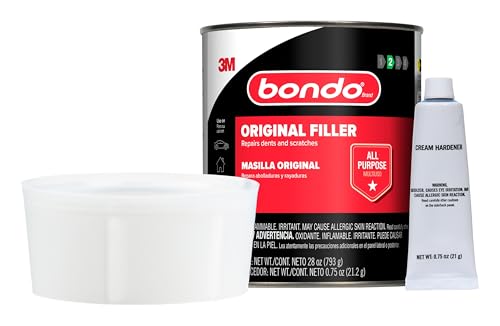
For repairs requiring additional shaping or feathering, our fiberglass repair kit works seamlessly with Bondo body fillers. Apply body filler over the cured fiberglass to fill pinholes, build contours, or create perfectly smooth transitions to the surrounding surface. This two-stage approach—fiberglass for structural repair, body filler for cosmetic finishing—mirrors professional body shop techniques.
More Professional-Grade Repair Solutions


Rated 4.8 by verified buyers
Common Questions About the Fiberglass Repair Kit
Coverage depends on repair depth and the number of fiberglass cloth layers applied. For typical small to medium repairs (holes or cracks up to 6 inches), one kit provides sufficient material for 3-4 repairs with multiple cloth layers.
Larger projects or deeper build-ups may require additional resin or cloth. The kit includes enough fiberglass cloth for approximately 1-2 square feet of single-layer coverage, with resin proportioned accordingly.
Yes, our fiberglass repair kit bonds to many materials including wood, metal, and some plastics. The resin creates strong adhesion to properly prepared surfaces, making it useful for composite repairs and reinforcement projects.
For best results on non-fiberglass surfaces, thoroughly sand or roughen the area to improve mechanical bonding. The repair will be strongest on fiberglass-to-fiberglass applications, but the system works well for reinforcing or patching other materials when properly prepared.
Yes, the bondo fiberglass repair kit cures to a completely waterproof finish suitable for below-waterline marine applications. The polyester resin creates a non-porous barrier that resists continuous water immersion.
For underwater repairs, ensure the damaged area is completely dry before application, and allow full cure time (24 hours minimum) before water exposure. Many boat owners successfully use this system for hull repairs, transom work, and other critical marine applications that remain submerged.
Body filler is optional but recommended for cosmetic finishing. The cured fiberglass repair provides structural strength but may have surface texture from the cloth weave or minor pinholes.
Applying Bondo body filler over the sanded fiberglass repair allows you to create perfectly smooth contours and fill any surface imperfections before priming and painting. This two-stage approach—fiberglass for structure, body filler for finishing—delivers professional results.
Working time at 77°F is approximately 10-12 minutes after mixing resin and hardener. Temperature significantly affects this window—hot conditions reduce working time to 5-8 minutes, while cooler temperatures may extend it to 15-20 minutes.
Mix only what you can apply within your working time window. The resin will begin to gel and thicken as it approaches cure, becoming difficult to spread or saturate cloth effectively. For large repairs, work in sections with multiple small batches rather than one large mix.
Yes, once fully cured and sanded, the fiberglass accepts primer and paint directly. For smoothest results, sand through progressive grits (80, 120, 180, 220) before priming.
Many users apply body filler over the fiberglass first to achieve showroom-smooth surfaces before painting. The fiberglass repair kit works with all standard automotive primers, marine gel coats, and household paints without special treatment or sealers.
Work in a well-ventilated area—polyester resin releases styrene vapors during mixing and curing. Wear nitrile gloves to prevent skin contact with uncured resin and hardener, and safety glasses to protect eyes from splashes.
Avoid smoking or open flames near the work area, as resin and hardener are flammable. The curing reaction generates heat, so don't mix large quantities in confined containers. Dispose of mixing containers and applicators according to local regulations for chemical waste.