


Bondo Body Filler for Cars
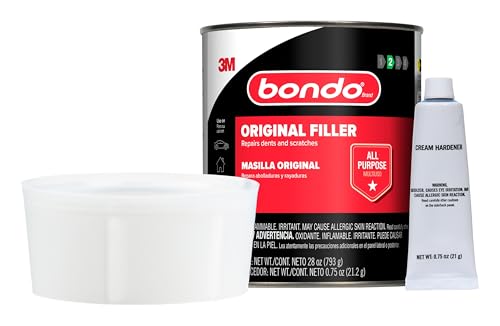
Our original Bondo body filler has been the professional auto body repair standard since 1955. This two-part polyester resin formula fills dents, dings, rust holes, and scratches on metal, fiberglass, and wood surfaces with exceptional strength and sandability.
Whether you're restoring a classic car or repairing collision damage, Bondo body filler for cars bonds directly to bare metal and sands smooth in under 30 minutes. The creamy consistency spreads easily without sagging on vertical surfaces, giving you complete control during application.
What's included with Bondo Body Filler
Formula & Application Process
Bondo body filler for cars uses a catalyzed polyester resin system that cures through chemical reaction, not air drying. You’ll mix the tan-colored filler with the included red cream hardener at a ratio of approximately 2% hardener to filler—about a golf ball-sized amount of filler needs a 1-inch ribbon of hardener.
The working time varies from 3 to 5 minutes depending on temperature and hardener amount, giving you enough time to apply and shape the material before it begins to set. Once mixed, spread the filler across the repair area using a plastic applicator in smooth, overlapping strokes.
Surface Compatibility & Preparation
Bondo body filler bonds to bare metal, aluminum, galvanized steel, fiberglass, and most rigid plastics when properly prepared. The surface must be clean, dry, and free from rust, oil, or old paint for maximum adhesion.
For metal repairs, we recommend grinding or sanding the area down to bare metal and creating a slight depression around the damage. This gives the filler a mechanical bond and prevents high spots. On fiberglass surfaces, rough up the area with 80-grit sandpaper to create tooth for the resin to grip.
Coverage & Layer Thickness
One quart of Bondo body filler covers approximately 60 square inches when applied at 1/4 inch thick, the maximum recommended single-layer depth. For deeper damage, build up the repair in multiple layers, allowing each to cure fully before adding the next.
Applying filler thicker than 1/4 inch in a single pass can cause heat buildup during curing, leading to cracking or incomplete hardening in the center. If your repair requires more depth, apply the first layer, let it cure 30 minutes, then sand lightly and add another layer.
Complete Your Auto Body Repair Kit


Rated 4.8 by verified buyers


Common Questions About Bondo Body Filler
Mix approximately 2% cream hardener by volume—for a golf ball-sized amount of filler, use a 1-inch ribbon of hardener. Too little hardener extends cure time and may leave the filler soft, while too much causes rapid hardening and potential cracking.
The mixed filler should turn from tan to a light pink color when properly blended. Working time ranges from 3-5 minutes at room temperature, so mix only what you can apply quickly.
No, Bondo body filler for cars requires clean, bare metal for proper adhesion. Sand or grind away all rust, paint, and primer down to bare metal before applying filler.
If rust has created pitting, treat the area with rust converter or grind back to solid metal. Applying filler over rust or paint will cause the repair to separate and fail within months.
Bondo becomes sandable in 15-30 minutes at 77°F and reaches full hardness within 1 hour. Cure time decreases in warmer temperatures and increases in cold conditions.
You can begin shaping and sanding once the filler is firm to the touch and sanding doesn't clog the paper. For maximum strength, wait 1-2 hours before applying heavy pressure or additional layers.
Apply Bondo body filler no thicker than 1/4 inch per layer to ensure proper curing and prevent cracking. Thicker applications trap heat during the chemical curing process, which can cause incomplete hardening in the center.
For deeper repairs, build up multiple 1/4-inch layers, allowing each to cure fully (30 minutes) before adding the next. Sand lightly between layers for better adhesion.
Standard Bondo body filler is designed for rigid surfaces like metal and fiberglass, not flexible plastics. Applying it to flex parts like modern bumper covers will cause the repair to crack as the plastic bends.
For plastic bumper repairs, use a flexible plastic filler specifically formulated to move with the material. Bondo works excellently on fiberglass bumpers and rigid plastic components that don't flex.
Pinholes form when air bubbles get trapped during mixing or application. Mix the hardener thoroughly using a folding motion rather than stirring, which introduces air. Apply filler with firm pressure to eliminate air pockets.
Small pinholes that appear after sanding are normal and easily filled with Bondo glazing putty, a thinner finishing compound designed to fill minor surface imperfections over cured body filler.
Yes, sanded Bondo body filler for cars accepts automotive primer and paint without additional preparation. For best results, clean the sanded surface with wax and grease remover, apply automotive primer, then topcoat.
The porous nature of sanded filler helps primer achieve excellent adhesion. Most professionals apply 2-3 coats of high-build primer over body filler to ensure complete coverage before painting.