


Bondo Hardener
Our Bondo Hardener is the catalyst that activates body filler for fast, durable repairs on metal, fiberglass, and wood surfaces. Formulated to deliver consistent curing times across a wide temperature range, this hardener ensures your automotive and home restoration projects set properly every time.
We package it in a tube designed for precise dispensing, so you can mix the exact ratio needed without waste. Whether you're repairing a vehicle panel or filling surface imperfections on furniture, our hardener provides the chemical reaction necessary for professional-grade results.
Formula & application specs
Chemical Composition & How It Works
Bondo Hardener contains an organic peroxide catalyst that initiates the polymerization process in polyester-based body fillers. When you add a ribbon of hardener to filler, the red tint serves as a mixing indicator — once the color is uniform throughout, the chemical reaction begins.
The amount of hardener you use directly affects working time and cure speed. We recommend a 2% ratio by volume for most applications: one inch of hardener ribbon per golf-ball-sized portion of filler. Adding more hardener speeds curing but can compromise strength, while too little extends work time but may result in incomplete hardening.
Proper Mixing & Application Technique
Achieving Uniform Activation
Dispense your body filler onto a clean, non-porous mixing board, then apply the recommended ribbon of bondo hardener across the top. Use a plastic spreader to fold and blend the materials together with firm strokes, scraping from edges to center.
Continue mixing for 30-60 seconds until the red tint completely disappears and you see a uniform color. Streaks of unmixed hardener will create soft spots in the cured filler, so thorough blending is essential.
Storage & Shelf Life
Store your bondo hardener in a cool location away from direct sunlight and heat sources, which can degrade the catalyst over time. The flip cap should be closed tightly after each use to prevent air exposure and moisture contamination.
Proper storage extends shelf life to approximately two years from the manufacturing date. Hardener that has separated into layers or changed color significantly should be replaced, as these signs indicate chemical breakdown that will affect curing performance.
Complete Your Body Filler Kit
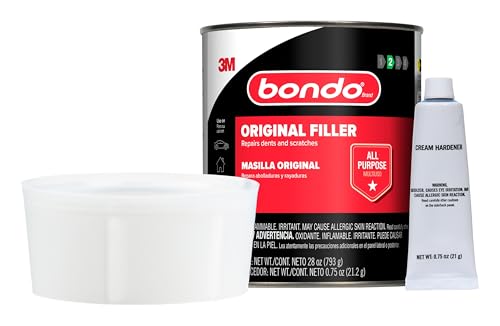


Rated 4.8 by verified buyers
Common Questions About Bondo Hardener
We recommend using approximately 2% hardener by volume — typically one inch of hardener ribbon for a golf-ball-sized portion of body filler. This ratio provides a 3-5 minute working time under normal conditions.
You can adjust slightly based on temperature and desired cure speed. In cooler environments, add 10-15% more hardener. In hot conditions, reduce the amount slightly to extend working time.
Bondo Hardener is formulated specifically for polyester-based body fillers and resins. While it may activate other brands' polyester products, we can only guarantee performance and compatibility with Bondo-branded fillers, putties, and resins.
Using it with products from other manufacturers may result in inconsistent curing times or incomplete hardening. For best results, pair our hardener with our body filler systems.
Excess hardener accelerates the curing reaction, reducing your working time to under 2 minutes and potentially creating brittleness in the finished repair. The filler may also generate excessive heat during curing.
Too little hardener extends work time but may result in incomplete curing, leaving tacky spots or soft areas that won't sand properly. If the mixed filler doesn't harden within 30 minutes at room temperature, you've likely used insufficient hardener.
When stored properly in a cool, dry location with the cap tightly closed, an opened tube maintains effectiveness for up to 24 months. Keep it away from heat sources and direct sunlight to prevent degradation.
If you notice the hardener has separated into layers, changed color significantly, or doesn't initiate curing when mixed with fresh filler, it's time to replace the tube.
Yes, you can use bondo hardener indoors provided you have adequate ventilation. The hardener itself has minimal odor, but the curing reaction with body filler releases styrene fumes that require fresh air circulation.
Open windows, use exhaust fans, or work in a garage with the door raised. Wear nitrile gloves to prevent skin contact, and safety glasses to protect against accidental splashes during mixing.
Temperature significantly impacts curing speed. The hardener performs optimally between 60°F and 90°F. Below 60°F, you'll need to add slightly more hardener or allow extended cure times before sanding.
Above 90°F, the reaction accelerates, reducing working time. Mix smaller batches in hot conditions and consider working during cooler parts of the day for complex repairs that require extended shaping time.
No, never dilute or thin bondo hardener with solvents, acetone, or other additives. Altering the chemical composition will prevent proper curing and may create safety hazards during the mixing process.
If you need extended working time, simply reduce the amount of hardener you add to the filler. A 1.5% ratio instead of 2% will give you an extra minute or two before the material begins to set.