


Bondo Glass Reinforced Filler
Bondo Glass is our strongest body filler, engineered with short-strand fiberglass reinforcement for maximum adhesion and durability on metal, fiberglass, and wood surfaces. When standard fillers won't hold, this professional-grade formula delivers structural repair strength that lasts.
We designed Bondo Glass for heavy-duty automotive body work, marine repairs, and restoration projects where you need superior strength and waterproof bonding. The fiberglass reinforcement creates a mechanical bond that resists cracking and shrinking, making it ideal for repairing rusted-out panels, filling large dents, and rebuilding damaged edges.
Technical specifications for Bondo Glass
Fiberglass Reinforcement Technology
The short-strand fiberglass dispersed throughout Bondo Glass creates a three-dimensional reinforcement matrix that dramatically increases tensile strength compared to conventional body fillers. These glass fibers interlock with the polyester resin base to form a structural bond that won’t pull away from repair surfaces under stress.
This reinforced formula excels on larger repairs where standard fillers would sag or crack. The fiberglass strands bridge gaps and provide mechanical strength that makes Bondo Glass particularly effective for rust repair, collision damage, and marine applications where waterproof durability matters. Our specialty fillers lineup includes this glass-reinforced option specifically for jobs requiring maximum holding power.
Surface Preparation and Application
Preparing the Repair Area
Proper surface preparation ensures maximum adhesion for bondo glass. Sand the repair area with 80-grit sandpaper to remove paint, rust, and contaminants down to bare substrate. Feather the edges of surrounding paint 2-3 inches beyond the damaged area for smooth transitions.
Clean the prepared surface with a wax and grease remover or acetone to eliminate any oils that could prevent proper bonding. For rusted metal, we recommend grinding or wire-brushing to bright metal before applying Bondo Glass.
Sanding and Finishing
Bondo Glass reaches sandable hardness in 20-30 minutes at room temperature. Begin shaping with 36 or 80-grit sandpaper on a sanding block to level the repair and establish proper contour. Work progressively through 120-grit and 180-grit for smoother surface preparation.
The fiberglass reinforcement means you’ll need slightly more sanding effort compared to standard fillers, but the material won’t load sandpaper excessively when properly cured. For best results, use a dual-action sander for large flat areas and hand-sand contoured sections.
Complete Your Automotive Body Repair Kit
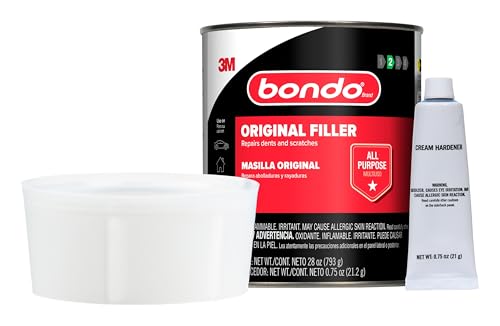


Rated 4.8 by verified buyers


Common Questions About Bondo Glass
Bondo Glass contains short-strand fiberglass reinforcement dispersed throughout the polyester resin base. These glass fibers create a three-dimensional reinforcement matrix that dramatically increases tensile strength and impact resistance compared to standard body fillers.
The fiberglass strands interlock with the resin to form mechanical bonds that resist cracking, shrinking, and pulling away from repair surfaces under stress. This makes bondo glass ideal for structural repairs, rust damage, and applications where maximum adhesion and durability are required.
No, we do not recommend bondo glass for plastic bumpers or flexible automotive parts. The rigid fiberglass-reinforced formula cannot flex with plastic substrates and will crack under movement.
For plastic bumper repairs, use our Bondo Flexible Filler or a specialized plastic repair adhesive designed to maintain flexibility. Bondo Glass works best on rigid substrates including metal, fiberglass, wood, and masonry where structural strength and permanent bonding are the priority.
Bondo Glass reaches sandable hardness in 20-30 minutes at 77°F. Cooler temperatures will extend cure time, while warmer conditions speed the curing process.
You'll know the filler is ready to sand when it turns from a tacky surface to a hard, solid feel. If the material is still slightly soft, wait another 5-10 minutes before sanding. The fiberglass reinforcement may require slightly more sanding effort than standard fillers, but proper curing ensures the material won't gum up sandpaper or create rough patches.
We recommend applying bondo glass in layers no thicker than 1/4 inch per application. Thicker applications may trap heat during the exothermic curing reaction, potentially causing cracking or incomplete curing.
For deeper repairs, apply multiple thin layers, allowing each coat to cure fully before adding the next. This layering technique provides better adhesion, eliminates air pockets, and creates a stronger overall repair. The fiberglass strands will bridge gaps up to 1/4 inch without backing material for most applications.
Yes, the polyester resin system in bondo glass cures through chemical reaction to create a waterproof barrier that resists moisture penetration. This makes it excellent for automotive rust repair, marine applications, and outdoor projects exposed to water and weather.
The cured filler will not absorb water or break down from moisture exposure when properly applied to a clean, prepared surface. For maximum protection, always apply primer and topcoat paint over the repair to seal the surface completely and protect the underlying substrate from future corrosion.
Yes, you can apply standard Bondo Body Filler or Bondo Glazing & Spot Putty over fully cured bondo glass. Many professionals use this technique, applying the glass-reinforced filler for structural strength and base filling, then topping with regular body filler for easier final shaping.
Scuff the cured bondo glass surface with 80-grit sandpaper before applying additional filler products to ensure proper mechanical adhesion between layers. This combination approach provides structural strength where needed while maintaining easier sanding for final surface preparation.
Bondo Glass bonds permanently to bare metal (steel and aluminum), fiberglass, wood, masonry, and properly prepared painted surfaces. For best adhesion, sand the substrate with 80-grit sandpaper to create a rough surface profile and remove all paint, rust, grease, and contaminants.
The filler will not bond well to plastic, chrome, galvanized metal, or contaminated surfaces. Clean the repair area thoroughly with wax and grease remover before application. The fiberglass reinforcement creates mechanical interlocking with porous substrates for maximum holding power on properly prepared surfaces.